
Many homeowners in Northern Virginia and Maryland are surprised to learn that basement water problems often start outside the home. While foundation cracks and groundwater pressure can contribute to moisture intrusion, improperly functioning gutters and downspouts are among the most common causes of wet basement walls, crawl space moisture, and foundation problems.
If your downspouts discharge water too close to your home, every rainfall can send hundreds of gallons of water directly toward your foundation. Over time, that excess moisture can saturate the soil, increase hydrostatic pressure against foundation walls, and create the perfect conditions for basement leaks.
How Gutters and Downspouts Protect Your Foundation
Your gutter system is designed to collect rainwater from your roof and direct it safely away from your home. Downspouts play a critical role in this process by carrying water from the gutters to a designated drainage area.
When gutters become clogged, damaged, or improperly installed—or when downspouts terminate too close to the foundation—the system can no longer do its job effectively.
Instead of protecting your home, the water collects around the foundation where it can lead to:
- Wet basement walls
- Crawl space moisture
- Foundation settlement
- Mold and mildew growth
- Soil erosion around the home
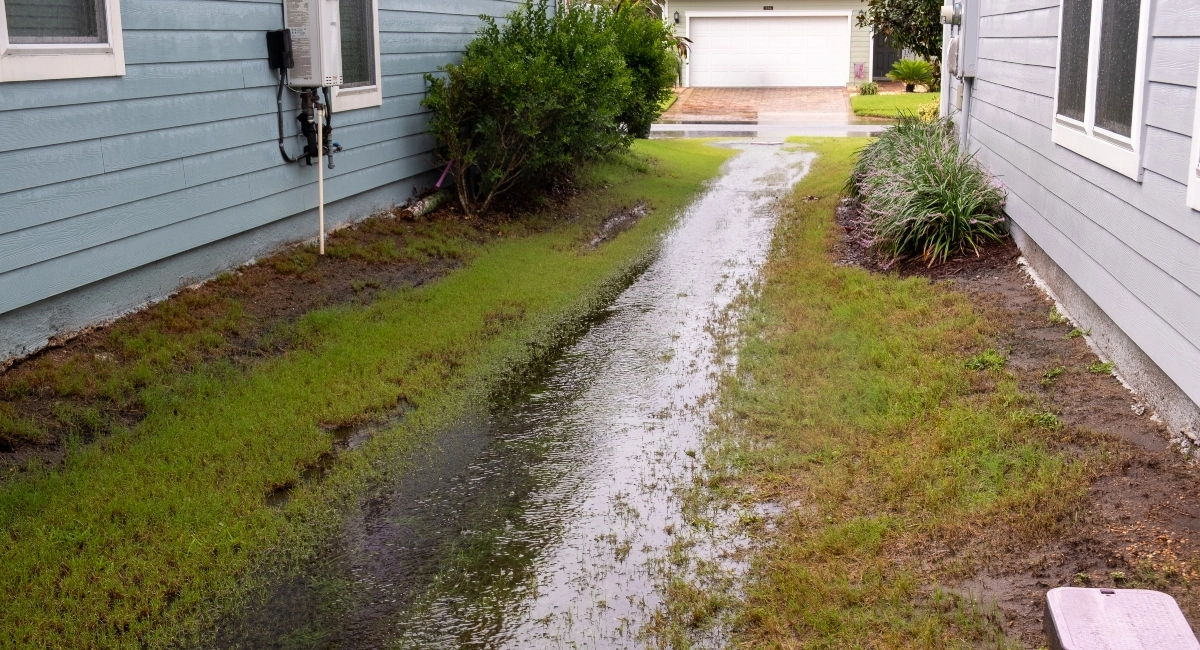
- Standing water in the yard
These problems are especially common throughout Northern Virginia, where clay-heavy soils can retain moisture and place additional pressure on foundation walls.
Warning Signs Your Downspouts May Be Causing Basement Water Problems
Not sure if your drainage system is contributing to water intrusion?
Watch for these common signs:
- Water pooling near the foundation after rain
- Overflowing gutters during storms
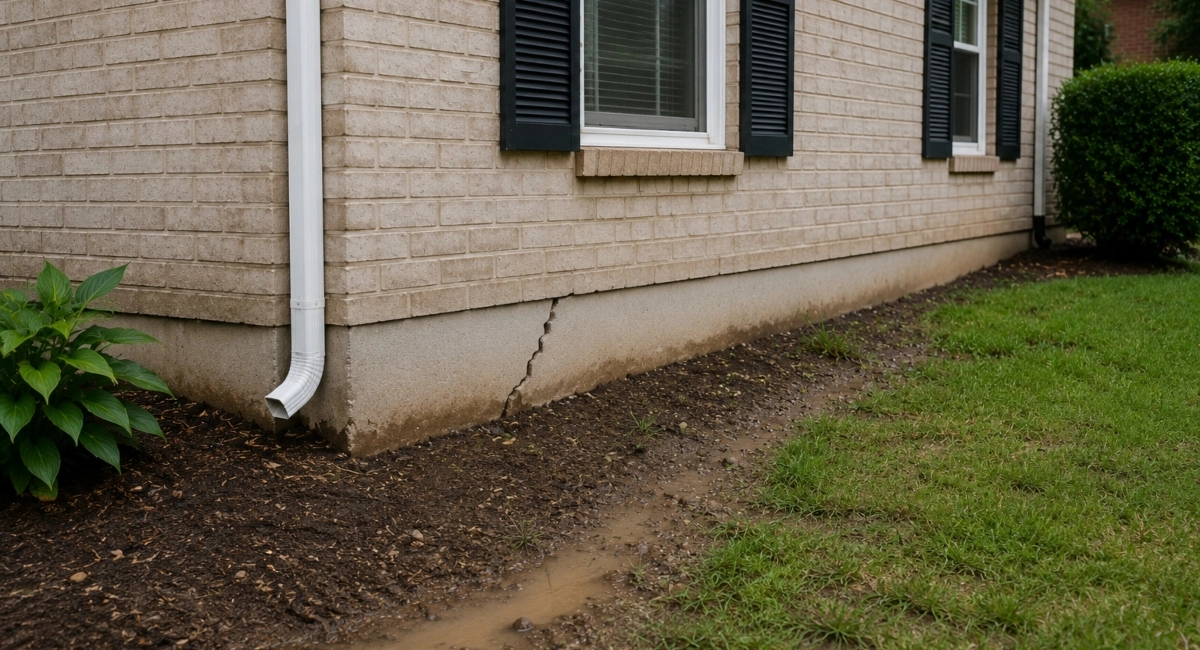
- Soil erosion around downspout discharge areas
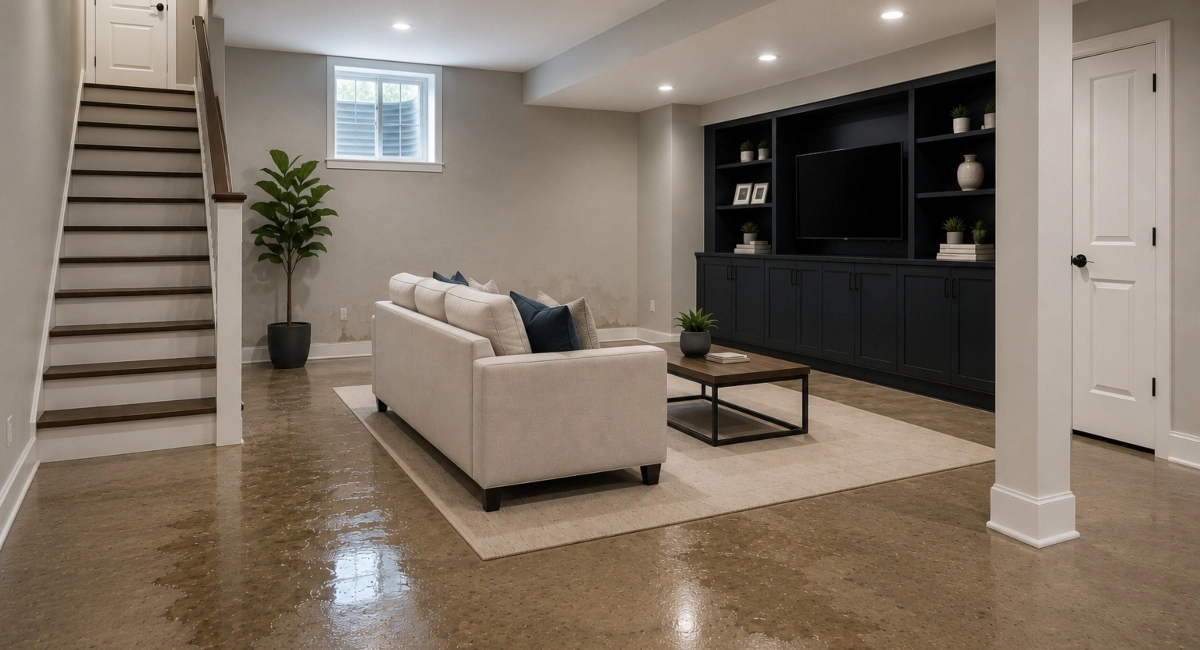
- Damp spots on basement walls
- Water stains or efflorescence on foundation walls
- Musty odors in the basement or crawl space
- Mold or mildew growth near foundation walls
If you notice any of these issues, your gutters and downspouts may not be directing water far enough away from your home.
How Far Should Downspouts Extend?
One of the most common drainage mistakes homeowners make is allowing downspouts to discharge water only a foot or two from the foundation.
In most cases, water should be directed at least 5 to 10 feet away from the home whenever possible. The goal is to move water beyond the area immediately surrounding the foundation where it can no longer contribute to soil saturation.
Several solutions may help accomplish this:
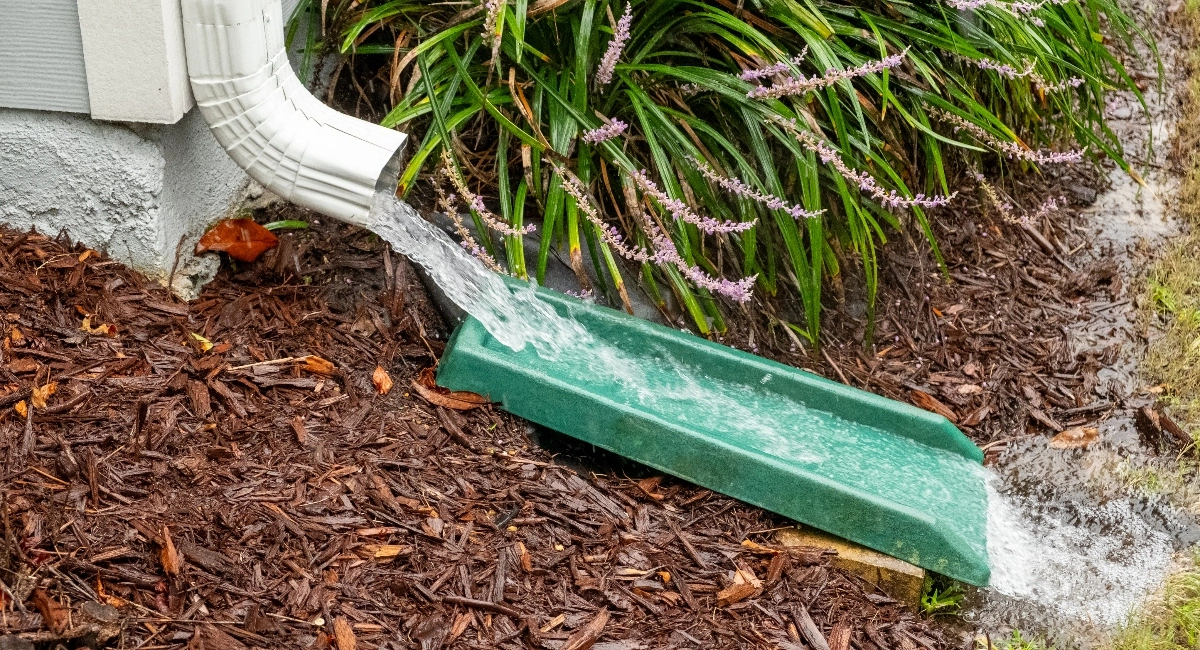
Downspout Extensions
Simple above-ground extensions can carry water farther away from the foundation and are often a cost-effective first step.
Underground Drainage Lines
For homeowners seeking a more permanent solution, buried drain pipes can transport roof runoff away from the house while remaining hidden from view.
Trench and Drainage Systems
In some cases, drainage trenches or exterior drainage systems may be necessary to safely direct water toward an approved drainage area. Proper design is essential to ensure water flows away from the home without affecting neighboring properties.
When Gutters Alone Won't Solve Basement Water Issues
While correcting gutter and downspout problems can significantly reduce moisture around your foundation, some homes require additional waterproofing measures.
If water continues entering the basement after improving exterior drainage, the issue may involve:
- Hydrostatic pressure beneath the foundation
- Failed footing drains
- Foundation cracks
- Improper grading around the home
- Groundwater intrusion
In these situations, solutions such as interior drainage systems, sump pumps, French drains, foundation crack repair, or exterior waterproofing may be necessary.
Additional Ways to Keep Water Out of Your Basement
Improve Yard Grading
The ground surrounding your home should slope away from the foundation to help surface water drain properly.
Maintain Footing Drains
Footing drains help collect and redirect groundwater before it reaches the foundation. If these systems become clogged or damaged, water can begin accumulating around basement walls.
Install a Sump Pump System
For homes with recurring groundwater issues, a sump pump system can provide an effective way to collect and remove water before it enters the living space.
Consider Exterior Waterproofing
In severe cases, exterior waterproofing systems can create a barrier that prevents moisture from reaching foundation walls altogether.
Protect Your Basement from Water Damage
Water around your foundation rarely improves on its own. Whether the problem is caused by short downspouts, poor yard drainage, hydrostatic pressure, or foundation issues, addressing the source of the moisture is the key to protecting your home.
Basement Masters Waterproofing provides basement waterproofing, foundation repair, crawl space solutions, sump pump installation, and yard drainage services throughout Northern Virginia and parts of Maryland. Our team can identify the source of water intrusion and recommend a solution designed specifically for your home.
Contact Basement Masters Waterproofing today to schedule a free inspection and estimate.
Blog was originally published in March 2022. It was revised June 3, 2026.