
Basement Flooding: Prevention, Cleanup & Waterproofing Solutions
Basement flooding is an unfortunate reality for many homeowners throughout Northern Virginia. Intense thunderstorms, remnants of tropical systems, prolonged spring rainfall, and rapidly changing weather can overwhelm drainage systems and saturate the soil surrounding your home’s foundation. Communities throughout Arlington, Alexandria, Fairfax, Springfield, Burke, McLean, Vienna, and the surrounding areas regularly experience flooding that can lead to water intrusion, foundation damage, and costly repairs.
While no home is completely immune to severe weather, many basement flooding problems can be prevented with the right waterproofing and drainage solutions. If water does enter your basement, acting quickly can reduce damage and help prevent long-term moisture issues like mold growth.
This guide explains why basements flood in Northern Virginia, what to do after flooding occurs, and how professional waterproofing can help protect your home before the next major storm.
Why Basement Flooding Is Common in Northern Virginia
Northern Virginia’s combination of dense development, aging infrastructure, clay-rich soils, and increasingly intense rainfall makes basement flooding more common than many homeowners expect. As the ground becomes saturated, water builds pressure against foundation walls—a condition known as hydrostatic pressure—which can force moisture through cracks, joints, and porous concrete.
Homes throughout Arlington, Fairfax County, Loudoun County, Prince William County, and neighboring communities often experience water intrusion after several days of heavy rain or a single severe storm. Even if your basement has never flooded before, changing weather patterns, clogged drainage systems, or a failing sump pump can quickly create problems.
Common causes of basement flooding include:
- Heavy rainfall and flash flooding
- Hydrostatic pressure around the foundation
- Poor yard grading
- Clogged gutters and downspouts
- Failed sump pumps
- Foundation wall or floor cracks
- Clogged footing drains
- High groundwater levels
Understanding why your basement floods is the first step toward finding a long-term solution.
How to Help Prevent Basement Flooding
While no waterproofing system can control the weather, proactive maintenance and professional drainage solutions can significantly reduce the risk of water entering your basement.
Keep Gutters and Downspouts Clear
Your gutter system plays an important role in protecting your foundation. When gutters overflow because they’re clogged with leaves and debris, water collects around the foundation instead of flowing safely away from your home.
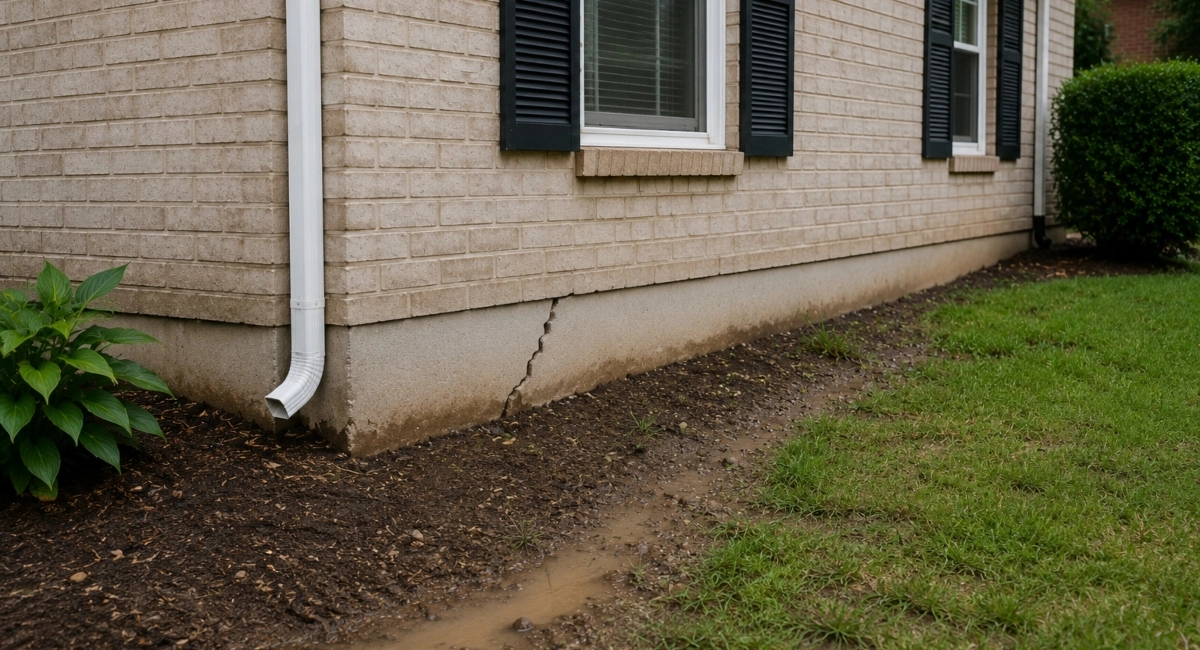
Downspouts should discharge water several feet away from the house to help reduce hydrostatic pressure and minimize soil saturation around the foundation.
Improve Drainage Around Your Property
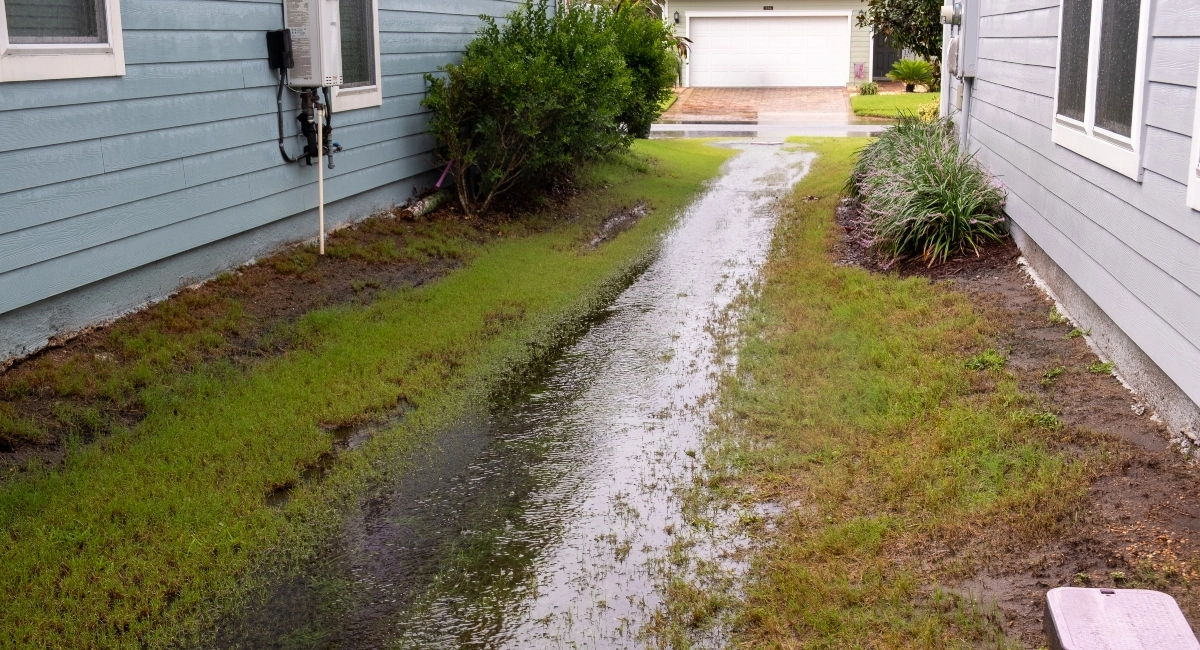
Water should always flow away from your home’s foundation. Poor grading, low spots in the yard, or landscaping that traps water against the house can contribute to basement leaks during heavy rain.
Professional drainage improvements, such as French drains or grading corrections, can help redirect water before it reaches your foundation.
Test Your Sump Pump
Your sump pump is your first line of defense during heavy storms. Test it regularly to ensure it’s operating properly, especially before spring rains and hurricane season.
For additional protection during power outages, many homeowners choose to install a battery backup sump pump that continues working even when electricity is unavailable.
Inspect Your Foundation
Small foundation cracks may not seem like a major concern, but they can become entry points for water during prolonged rainfall. Regular inspections help identify minor issues before they become costly repairs.
Schedule a Waterproofing Inspection
If you’ve experienced recurring basement leaks, damp walls, musty odors, or previous flooding, a professional inspection can identify the source of the problem and recommend solutions tailored to your home.
What to Do After Your Basement Floods
If water enters your basement, acting quickly can help minimize damage and reduce the risk of mold growth.
Put Safety First
Before entering a flooded basement, make sure it’s safe to do so.
If water has reached electrical outlets, appliances, or wiring, turn off power to the affected area if it can be done safely. If you cannot safely access your electrical panel, contact a licensed electrician.
Floodwater may contain bacteria, sewage, chemicals, or hidden debris, so wear waterproof boots, rubber gloves, eye protection, and an N95 mask if mold is present.
Never allow children or pets into a flooded area.
Document the Damage
Before moving furniture or beginning cleanup, take photographs of all affected areas, including damaged flooring, walls, appliances, furniture, and personal belongings.
If your insurance policy covers the damage, thorough documentation can help support your claim.
Contact Your Insurance Company
Coverage for basement flooding varies depending on the source of the water and your insurance policy. Contact your insurance provider as soon as possible to begin the claims process and determine what documentation is required.
Remove Standing Water
The faster standing water is removed, the better. Depending on the amount of water, removal methods may include:
- A functioning sump pump
- Wet/dry vacuum
- Portable utility pump
- Mop and bucket for minor flooding
Prompt water removal helps reduce damage to flooring, drywall, furniture, and stored belongings.
Begin Drying the Basement
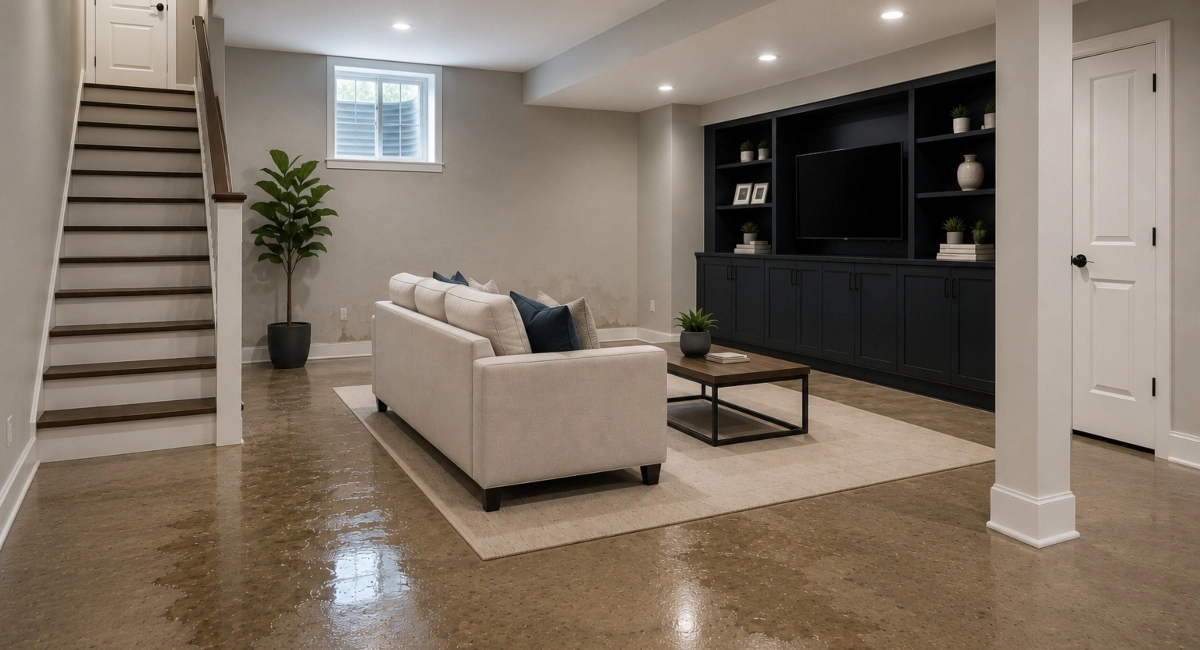
Even after standing water has been removed, moisture remains trapped inside concrete, wood framing, insulation, and flooring materials.
Use fans, dehumidifiers, air movers, and ventilation to thoroughly dry the space. Complete drying may take several days depending on the severity of the flooding.
For a detailed, step-by-step cleanup process, read our Flooded Basement Cleanup Guide.
Signs You May Need Professional Waterproofing
Cleaning up after a flood doesn’t solve the reason water entered your basement. If you notice any of the following, it’s time to have your home professionally evaluated:
- Water returns after every heavy rain
- Foundation wall or floor cracks
- Persistent dampness
- Musty odors
- Visible mold growth
- White mineral deposits (efflorescence) on foundation walls
- Standing water around your foundation
- A sump pump that runs constantly during wet weather
These symptoms often indicate an underlying drainage or waterproofing problem that won’t resolve on its own.
Waterproofing Solutions That Help Protect Your Home
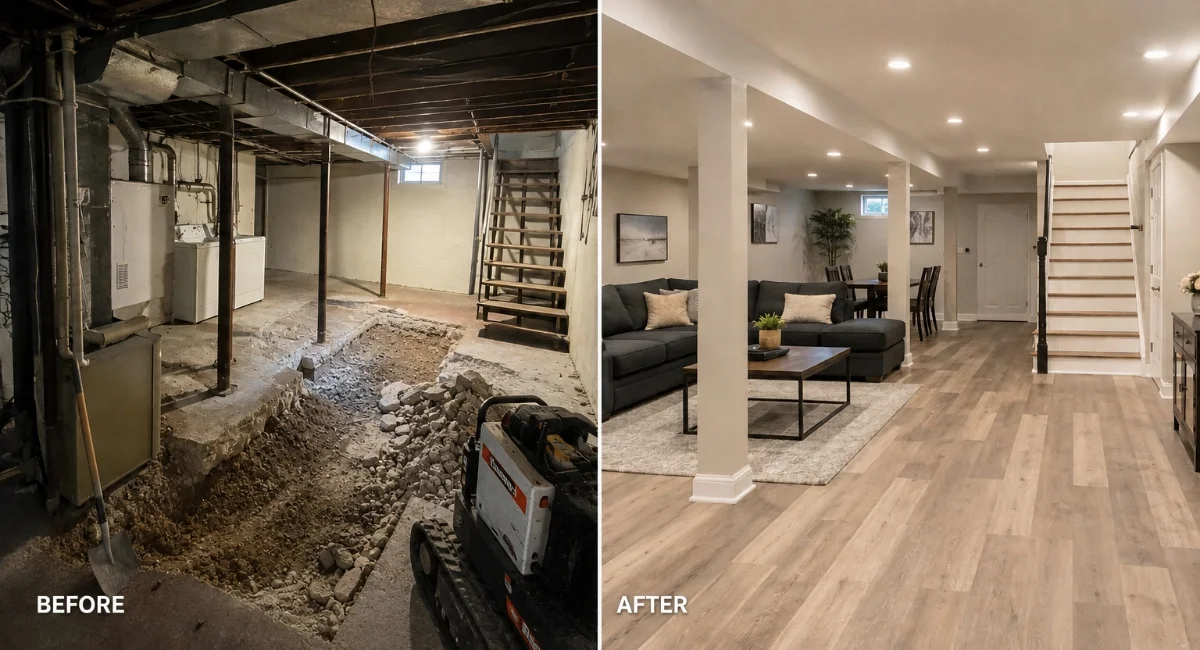
Professional waterproofing addresses the source of water intrusion rather than simply cleaning up after the damage has already occurred.
Interior Waterproofing Systems
Interior waterproofing systems are designed to collect water before it reaches your basement floor and redirect it safely away from your home.
Depending on your home’s needs, solutions may include:
- Interior drainage systems
- Drain tile systems
- Sump pumps
- Battery backup sump pumps
- Vapor barriers
- Sump pits
These systems work together to manage groundwater and reduce the likelihood of basement flooding during heavy rain.
Exterior Waterproofing Solutions
Exterior waterproofing focuses on preventing water from reaching your foundation in the first place.
Solutions may include:
- Exterior drainage systems
- Foundation waterproofing membranes
- Perimeter drain pipe installation
- Grading improvements
- Downspout extensions
Because every property is different, the right waterproofing approach depends on your home’s construction, drainage conditions, and the source of the water intrusion.
Why Basement Flooding Often Returns
Many homeowners assume that once the water is cleaned up, the problem has been solved. Unfortunately, recurring flooding usually indicates a larger issue that hasn’t been addressed.
Common causes of repeat basement flooding include:
- Poor exterior drainage
- Failing waterproofing systems
- Inadequate grading
- Foundation damage
- Aging drain tile systems
- An undersized or failing sump pump
Addressing these problems early can help prevent more extensive structural damage and expensive repairs in the future.
Why Northern Virginia Homeowners Trust Basement Masters Waterproofing
For more than 25 years, Basement Masters Waterproofing has helped homeowners throughout Northern Virginia and parts of Maryland protect their homes from basement flooding, foundation leaks, and excess moisture.
Our experienced team doesn’t believe in one-size-fits-all solutions. Every home is carefully evaluated to determine where water is entering and which waterproofing system will provide the most effective long-term protection.
Our services include:
- Basement waterproofing
- Interior drainage systems
- Exterior waterproofing
- French drains
- Sump pump installation
- Battery backup sump pumps
- Foundation crack repair
- Crawl space waterproofing
- Moisture control solutions
Protect Your Home Before the Next Storm
Heavy rain and flash flooding are part of life in Northern Virginia, but recurring basement flooding doesn’t have to be.
If your basement has flooded—or you’d like to reduce the risk before the next major storm—Basement Masters Waterproofing can help. We provide customized basement waterproofing, drainage, sump pump, and foundation repair solutions designed specifically for the conditions homeowners face throughout Northern Virginia and parts of Maryland.
Contact Basement Masters Waterproofing today to schedule your free inspection and discover the right waterproofing solution for your home.